Casino tables look like the simplest thing in the world — some felt, a few chip trays, maybe a
card shoe. But underneath that quiet surface, a growing number of gaming floors are running
technology that would feel right at home in a high-end PC build: embedded sensors, real-time
data pipelines, and automated fraud detection that works faster than any human eye could
follow.
The technology is called RFID, and it is quietly transforming how casinos operate from the
inside out. Whether you are a table game regular or just someone who appreciates how
hardware and software combine to create seamless experiences, understanding RFID tables
gives you a look at one of the most interesting tech setups you will never see on the floor.
What RFID Actually Does on a Casino Table
RFID stands for Radio Frequency Identification. On a casino table, the system works through
three components working together:
The tags. Every chip contains a passive RFID microchip embedded inside the chip body during
manufacturing. This tag holds a unique serial number that identifies the chip’s denomination, its
issue batch, and whether it belongs to that specific casino’s inventory.
The reader. A grid of antenna coils is embedded beneath the felt surface of the table. These
antennas continuously emit a low-power radio field. When a tagged chip enters the field, the
antenna energizes the chip’s tag, which transmits its serial number back to the reader.
The backend. The reader sends every detected chip event to the casino’s central management
system over a dedicated network. The system reconciles chip counts, tracks movement, and
flags anomalies — all in real time.
The whole cycle, from chip detection to dashboard update, happens in under 500 milliseconds
on well-configured systems. By the time the dealer finishes collecting the cards, the system
already knows whether every chip on the table belongs in play.

What Challenges Can RFID Poker Table Solve?
RFID poker tables represent the new standard in modern casino operations. By integrating RFID poker chips with intelligent RFID table and casino management systems, operators gain real-time visibility over every wager, chip movement, and player activity.
The Numbers Behind the Tech
Casinos deploying RFID casino poker chips are not doing it for the novelty. The financial case is
direct and measurable.
The Nevada Gaming Control Board’s 2023 enforcement report attributed approximately $40
million in annual gaming-related fraud to gaps in chip verification workflows — counterfeit chips
entering play, chips stolen between shift changes, and manual counting errors that went
undetected for hours. RFID systems are designed to close every one of those gaps
simultaneously.
On the accuracy side, the Macau Gaming Inspection and Coordination Bureau’s 2024
operational review found that properties using RFID table systems achieved 99.4% chip
accounting accuracy across all tables, compared to 94.7% for properties relying on manual
counts. That 4.7 percentage point difference might sound small. Across a property handling
millions of dollars in daily chip volume, it represents a substantial recovery of previously
unaccounted-for inventory.
A single high-volume table generates between 200 and 400 discrete data events per hour
during peak play, according to the Nevada Gaming Control Board’s 2024 technology review.
Across a 50-table floor, the system is processing 10,000 to 20,000 synchronized data points
every hour — each one validated and reconciled in real time.
How It Feels at the Table
For players, the RFID system is invisible. You place your bet, the dealer runs the hand, and you
collect your winnings or swallow your loss. Nothing about the experience changes — except
that the game is more secure, the payouts are more accurate, and the floor runs more
efficiently.
For dealers and pit managers, the difference is significant. Manual chip counts that used to take
20 to 30 minutes per table at shift change are now completed in seconds. The system
reconciles the table’s chip inventory against the vault’s issuance records automatically, and any
discrepancy triggers an instant alert rather than a delayed investigation.
This is the same principle that makes good game design work: the player-facing experience
stays clean and intuitive, while the systems running underneath handle the complexity. The best
games — and the best casino floors — are the ones where the technology disappears into the
experience.
The Anti-Cheat System That Never Blinks
Gamers know the frustration of dealing with cheaters, and they know the value of a solid anti-
cheat system. Casino operators face the same problem, just with higher stakes.
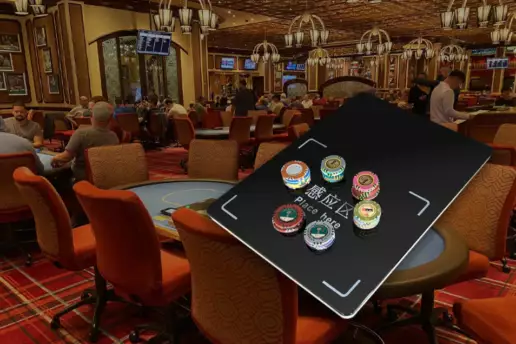
RFID tables function as a physical anti-cheat layer. Here is how:
- ● Counterfeit detection. A chip that does not match the casino’s database is flagged the
instant it enters the reader field. The visual quality of the fake does not matter — if the
embedded serial number is not in the system, the alert fires immediately, typically before
the next hand is dealt.
● Movement tracking. The system monitors chip movement patterns across the table
layout. Chips that appear in impossible locations or move against the established flow of
play generate automatic flags for pit management review.
● Count reconciliation. Every table maintains a running inventory that updates with each
chip event. When the physical count drifts from the expected count, the discrepancy is
surfaced instantly rather than discovered hours later during a manual audit.
For a deeper technical breakdown of how RFID sensing hardware detects and verifies chips in
real time, our guide to RFID chip sensing devices covers the detection architecture and how it
integrates with casino management systems.
What Comes Next: AI and the Smart Floor
The current generation of RFID tables is impressive, but the next iteration is already taking
shape. Casinos are beginning to layer machine learning models on top of their RFID
infrastructure, and the results are pushing the technology closer to something out of a sci-fi
game.
These AI systems learn the normal patterns of each table — how chips flow during a typical
baccarat session, how long a blackjack hand takes from deal to payout, what the chip count
looks like at different points in a shift. When something deviates from those learned patterns,
the system flags it, even if the deviation is too subtle for human observers to catch.
The American Gaming Association’s 2025 technology standards committee is reviewing
proposals for standardized data event formats across RFID table manufacturers, which would
make it easier for multi-property operators to deploy these AI models consistently across
different hardware platforms.
There is also growing interest in cloud-hybrid architectures, where table data syncs
simultaneously to on-premise servers and cloud-based analytics platforms. The business
intelligence potential — understanding which tables perform best, which shifts see the most
anomalies, where to allocate staff — is driving adoption even among smaller operators who
previously could not justify the on-premise infrastructure cost.
Why This Matters Beyond the Casino
RFID table technology is one of the most demanding real-time tracking systems deployed
anywhere in the world. It has to work under adversarial conditions (people actively trying to
defeat it), meet regulatory audit standards, and process thousands of events per hour with sub-
second latency. The lessons learned from casino RFID deployments are already influencing
system architecture in healthcare asset tracking, retail inventory management, and
manufacturing logistics.
But for anyone who has ever appreciated how a well-designed game hides its complexity
behind a clean interface, the casino RFID table is a particularly satisfying example of the same
principle at work. The felt looks the same. The chips feel the same. The game plays the same.
Underneath, thousands of data events per hour flow through a system that protects the integrity
of every hand dealt — and nobody at the table even knows it is there.